
Role
Product Designer
Skills
UX/UI Design, Design Systems, Brand Identity, Prototyping
Timeline
Feb - Apr 2026
Tools
Figma, Photoshop, Illustrator
Context
I've always felt like music apps know a little too much about our past selves. You listen to one sad song and suddenly your recommendations are emotionally devastated for the next three months.
Most platforms are great at tracking what we've listened to before, but not always great at understanding who we are today. Recommendations often feel repetitive, disconnected from our current mood, and surprisingly static for something as emotional as music.

I wanted to explore what would happen if recommendations changed with us too.
Opportunity
Rather than designing another streaming platform, I wanted to design a new way to discover music.
I set out to create an experience that:
adapts to how users feel in the moment
encourages self-expression through music
makes discovery feel exciting again
adds a social layer to listening
turns everyday moods into something shareable
creates a personal mood journal over time

At its core, dayli asks a simple question:

Solution
Music recommendations built around emotion.
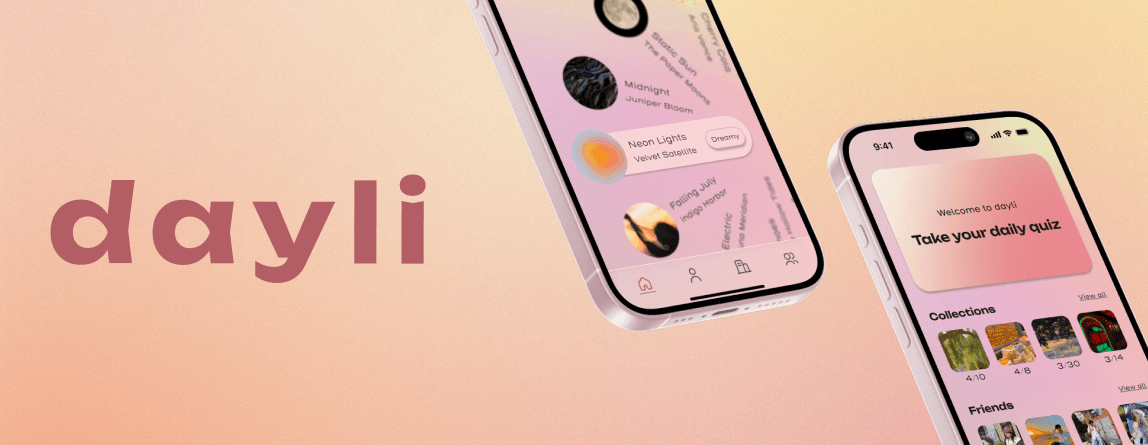
Each day, users answer five quick personality-style prompts that capture their current vibe. From there, dayli generates playlists designed specifically for that version of them.
The experience is intentionally lightweight: answer a few questions, recieve a personalized playlist, save your mood for later, compare your vibe with friends

Over time, users build a collection of musical snapshots that reflect different moments, moods, and versions of themselves.
How dayli achieves this:
Start with mood, not history
Most recommendation systems begin by asking:
"What have you listened to before?"
dayli begins with:
"How are you feeling today?"

Questions should feel like prompts, not surveys
One thing I wanted to avoid was making the experience feel clinical.
The questions were designed to feel:
playful
expressive
conversational
easy to answer
So instead of:
"Please rate your emotional state from 1–10."
We ask:
"Which version of yourself are you today?"
The goal was to make self-reflection feel enjoyable rather than something users had to complete before getting to the music.

Make music social again
One of my favorite parts of the concept was the friend-matching feature.
Users can compare moods with friends and unlock playlists that blend both of their listening styles together. Music became a conversation starter, a shared experience, and a way to understand someone else a little better.
Instead of focusing on followers or engagement metrics, the feature focuses on connection.

Design for emotion
The visual system became a huge part of the storytelling.
I wanted dayli to feel:
warm, expressive, dreamy, and personal
To achieve that, I built the interface around:
soft gradients, peach and lilac tones, rounded shapes, and layered blur effects

Keep interactions small
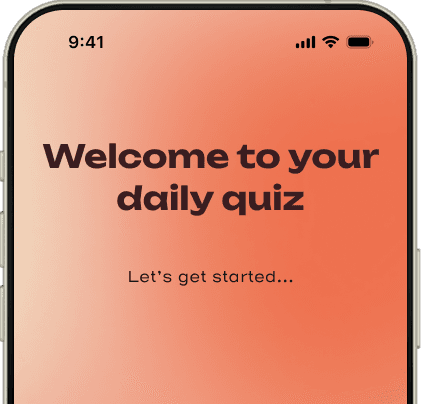
The daily check-in takes less than 30 seconds.
I didn't want users to feel like they were maintaining another app.
Small interactions like:
swiping through prompts
saving daily moods
unlocking shared playlists
revealing recommendations
were designed to make the experience feel rewarding even during very short sessions.
Reflection
dayli taught me how powerful personality can be in product design.
Unlike many projects focused on efficiency or productivity, this one explored how design can create emotional connection through:
visual storytelling
interaction design
branding
self-expression

I’d love to explore:
Spotify integration
mood trend visualizations
animated mood transitions
collaborative group playlists
seasonal and contextual recommendations
Most importantly, I'd continue exploring how music can help people better understand themselves—and each other.